
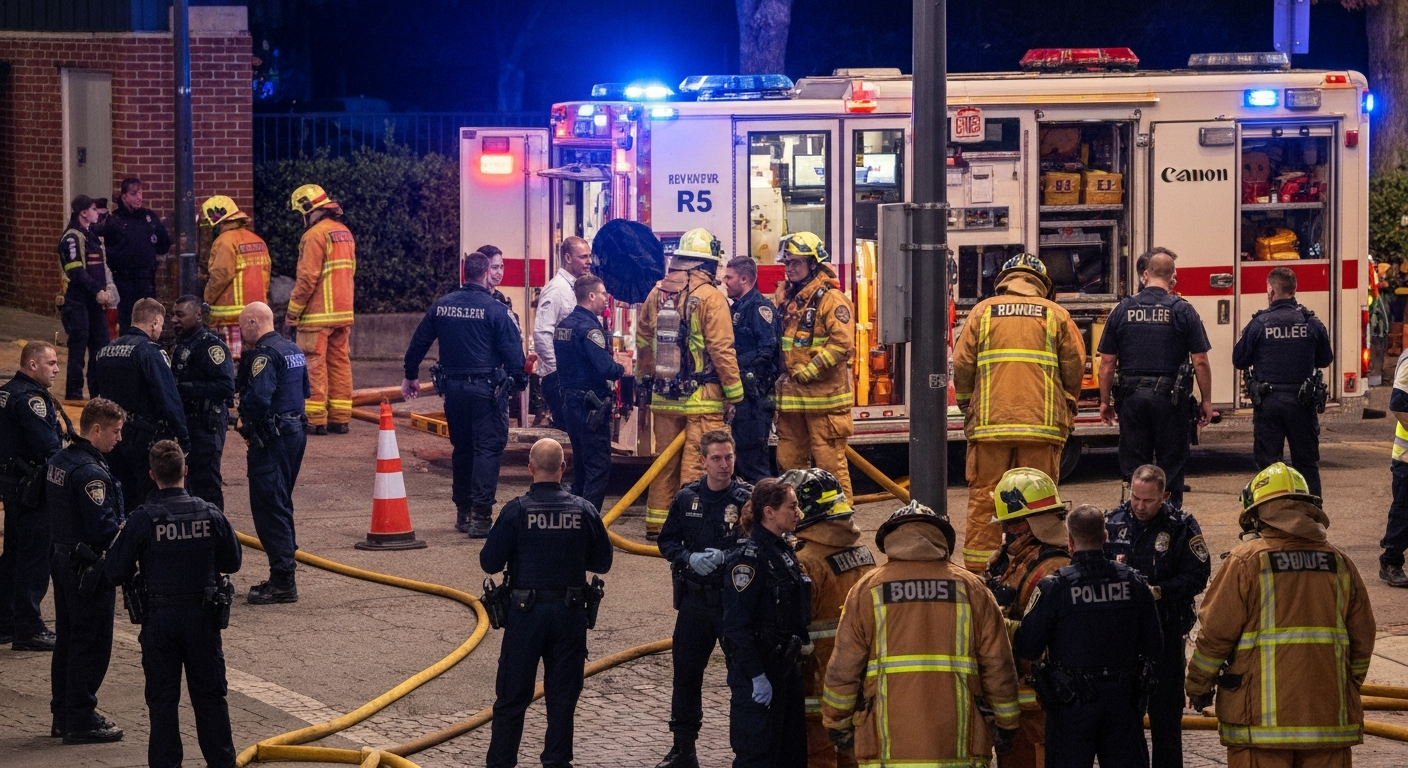
Beyond the Shift: Real Strength for Memphis First Responders
Written by Rob Yahn
You’ve been clearing calls all day, the radio buzzing, the stress tightening your shoulders. You get home, kick off your boots, and that familiar ache settles in. Maybe it’s your lower back from lifting, your knees from running stairs, or just the deep fatigue that no amount of sleep seems to touch. You know you need to do something for your health, for your performance on the job, and for your future, but the idea of another “workout program” feels like just another demand on an already overloaded life. You might even be thinking about trying something like CrossFit, but then the stories of injuries, the intense videos, and the feeling of being “too out of shape to start” creep in. That inner voice tells you it’s too risky, too extreme, or just not for you.
This isn’t about blaming you for feeling that way. It’s a common experience for law enforcement officers, firefighters, paramedics, and other emergency responders in Memphis and across the country. The job itself is a constant physical and mental stressor, and the conventional advice often misses the mark. You need a different kind of strength, one that supports your work, prevents injury, and builds resilience for the long haul – not just something that looks good on social media. The real problem isn’t your motivation; it’s finding an approach that respects the unique demands of your profession and meets you where you are, without judgment or unrealistic expectations.
The Demands of the Job: More Than Just Physical
Your work isn’t a typical 9-to-5. It demands bursts of explosive power, sustained endurance, and the ability to move through unpredictable environments, often under extreme stress. This isn’t just about lifting heavy weights; it’s about functional strength that translates directly to saving lives, protecting others, and keeping yourself safe. A study published in the Journal of Occupational and Environmental Medicine (Smith et al., 2018) highlighted that musculoskeletal injuries are a leading cause of lost work time among emergency personnel, often stemming from the cumulative impact of physical demands and lack of targeted, preventative training. The stakes are higher for you. Your fitness isn’t just about looking good; it’s about operational readiness, longevity in your career, and being able to be there for your family when the shift is over.
Many first responders fall into a cycle of reactive fitness: waiting for an injury to happen, or for performance to decline, before seeking help. Others try high-intensity programs that aren’t properly scaled, leading to burnout or injury, reinforcing the belief that “this isn’t for me.” What’s needed is a proactive strategy, a structured program that understands the unique physical and mental toll of your work. This means focusing on strength that supports your joints, builds resilience, and improves mobility, rather than just chasing intensity.
Building Real-World Strength and Resilience
A truly effective approach for emergency responders focuses on several key areas. First, foundational strength. This isn’t about maxing out your deadlift every day, but consistently building strength in movements that mimic your job: pushing, pulling, lifting, carrying, and bracing. Second, mobility. Being able to move freely and without pain is critical for avoiding injury and maintaining agility. This means dedicating time to improving your range of motion and joint health. Third, conditioning that reflects the intermittent, high-intensity nature of emergency work. You need to be able to go from zero to sixty in an instant, recover, and do it again.
This kind of training needs to be coach-led, with an emphasis on proper form and scaling for any fitness level. You don’t need to be an elite athlete to start; you just need to be willing to learn and show up. What you’ll find is that a well-coached program, even if it has elements reminiscent of CrossFit, is fundamentally different from the intimidating image you might have in your head. It’s about meeting you where you are and building you up safely and effectively. In Memphis, we work with adults from their 20s to their 70s and beyond, including many first responders, to build this kind of sustainable fitness.
Beyond the physical, there’s the critical component of healthy aging and longevity. For those of you who want to maintain your physical capabilities and health for decades to come, a comprehensive approach is vital. This includes not only strength and mobility programming but also attention to nutrition, recovery, and even physician-led medical weight loss support, including options like tirzepatide or semaglutide, when appropriate. This isn’t about quick fixes, but about building systems and habits that support a long, healthy, and capable life, both on and off duty. You can learn more about optimizing your healthspan in our Longevity Lab resources.
The Outcome: Sustained Performance and a Better Future
When you commit to a structured, coach-led program, the outcomes extend far beyond just feeling “stronger.” You’ll find yourself moving with greater ease on the job, reducing those nagging aches and pains. The mental resilience you build in the gym translates to better decision-making under pressure. You’ll have more energy for your family, more capacity for hobbies, and a clearer path to a long, healthy life post-retirement. Diana, a business owner and caregiver in her 50s who thought she couldn’t do “anything like that,” found herself laughing because she was doing the very things she thought were impossible for her just the day before. This isn’t about being an impossible athlete; it’s about discovering the athlete that’s already in you and nurturing it.
This isn’t about extreme diets or intimidating gym culture. It’s about a real plan, real coaching, and real accountability that actually fits your life. It’s about building strength and resilience that serves you on the job and helps you age better, allowing you to do what you love for longer. If you’re a first responder in Memphis, TN, looking for a way to build durable strength, improve your health, and ensure longevity in your career and life, we understand the specific challenges you face.
If this resonates with where you are right now, we’d love to have a conversation about how a structured, coach-led approach can support your unique needs. This isn’t a sales call; it’s a chance to talk about your goals and see if what we do makes sense for you. Save 901-657-4552 to your contacts before we call — otherwise it will get screened as spam and we’ll lose you. You can learn more and book a free consult at Fit 901 1-on-1 Coaching.
About the Author
Rob Yahn is a dedicated coach and a Memphis firefighter-paramedic with the Memphis Fire Department since 1996, having served in the fire service since 1994. With over 20 years as a Fire Lieutenant / Company Officer on some of Memphis’s busiest truck companies, Rob brings a unique understanding of high-stakes environments to his coaching. He is a USAW-certified coach and a CrossFit L2 Trainer, leveraging this expertise to guide clients from their 20s to 70s+, meeting each at their current level and building them to their best.