
GLP-1 Weight Loss Coaching: Sustainable Health in Memphis
Key takeaways
Learn how GLP-1 medications, combined with coaching, offer a sustainable path to weight management and wellness in Memphis.
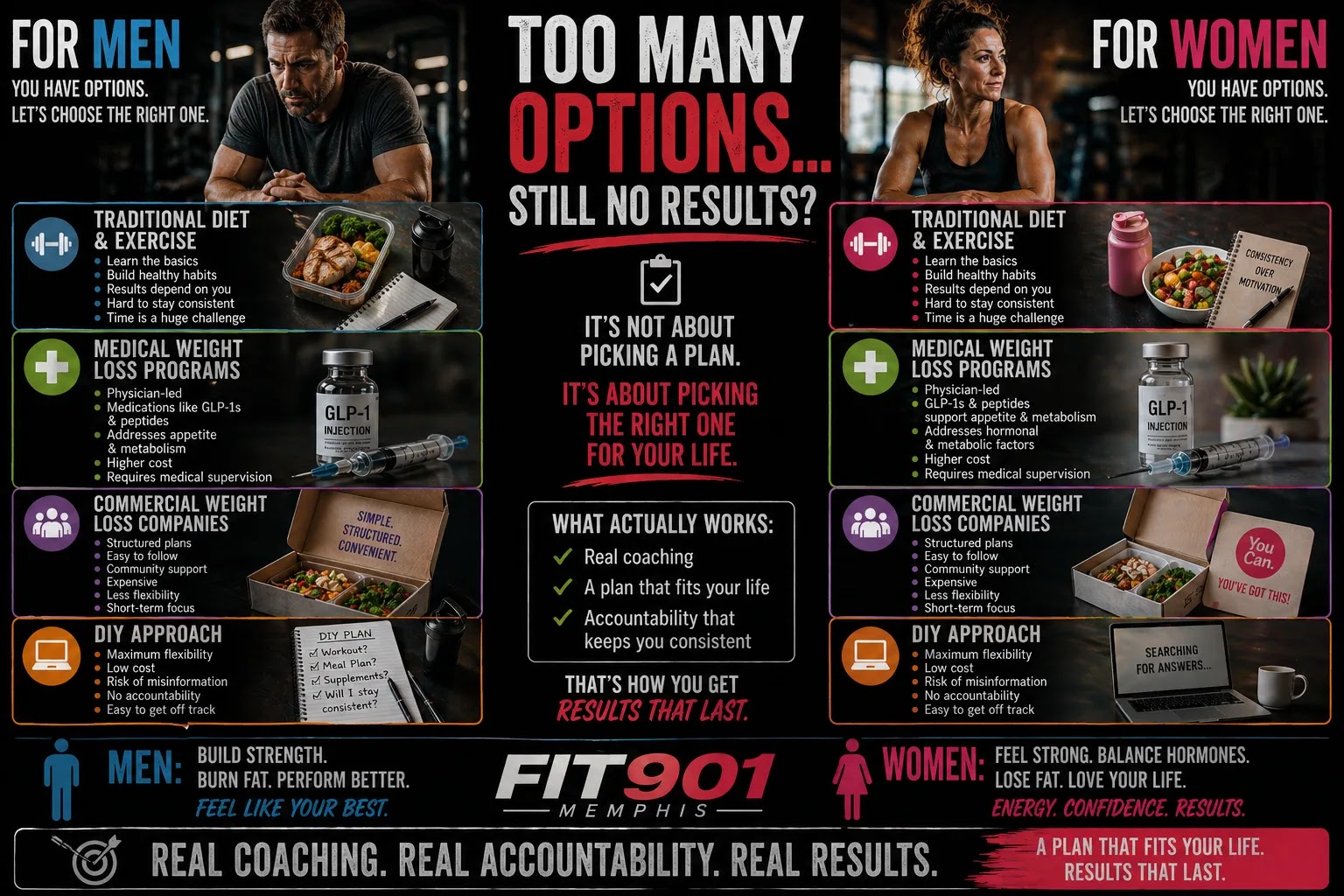
Sarah was tired. Tired of the diets that promised the world but delivered only frustration. Tired of starting over, again and again, feeling like she was fighting her own body. She’d heard about GLP-1 medications and seen people find success, but she knew a pill wasn’t a magic bullet. She needed more than a prescription; she needed a real plan, real coaching, real accountability that actually fit her life in Memphis. That’s where Fit 901 steps in, offering a clear path to sustainable health and wellness, combining the science of GLP-1s with personalized coaching.
Understanding GLP-1 Medications for Weight Management
GLP-1 receptor agonists are a class of medications initially developed for type 2 diabetes but have shown significant efficacy in weight management. These medications mimic the action of a natural hormone called Glucagon-Like Peptide-1 (GLP-1) in your body. When you eat, GLP-1 is released from your gut, signaling to your brain that you’re full, slowing down stomach emptying, and helping regulate blood sugar (Drucker, 2018). For individuals struggling with weight, GLP-1 medications can help reduce appetite, decrease food cravings, and promote a feeling of fullness, leading to reduced calorie intake and weight loss (Wilding et al., 2021).
It’s important to understand that these medications are a tool, not a standalone solution. Their effectiveness is significantly enhanced when combined with comprehensive lifestyle changes, including dietary modifications and increased physical activity (Rubino et al., 2021). This is where a structured coaching program becomes invaluable, providing the framework for integrating these changes into daily life.
The Role of Coaching in GLP-1 Weight Loss
Simply taking a GLP-1 medication without addressing underlying habits often leads to limited or temporary results. This is a common pitfall when people are tired of starting over. Effective GLP-1 weight loss coaching provides the support and structure necessary for long-term success. It moves beyond just the medication to build sustainable habits.
A coach helps you understand how to eat in a way that complements the medication’s effects, ensuring you’re getting adequate nutrition while managing your calorie intake. They guide you in developing a sustainable exercise routine that meets you where you are, whether you’re just starting or looking to intensify your workouts. This isn’t about random workouts; it’s about building a movement practice that actually fits your life.
Actionable Steps for Today:
- Track your current food intake for two days: Use a simple journal or app to record everything you eat and drink. This provides a baseline understanding of your habits (Fogg, 2019).
- Identify one small, consistent movement: Choose something you can do daily, like a 10-minute walk around your Memphis neighborhood or taking the stairs instead of the elevator. Consistency builds momentum (Clear, 2018).
Personalized Nutrition Strategies with GLP-1s
When on GLP-1 medication, your hunger signals change, but the need for balanced nutrition remains. A personalized nutrition strategy focuses on whole, nutrient-dense foods that support satiety and overall health. This means prioritizing lean proteins, fiber-rich vegetables, and healthy fats while reducing processed foods and excessive sugars. The goal is to maximize the medication’s effect on satiety while ensuring your body receives essential nutrients.
For example, a coach might help you plan meals that are high in protein, which is known to be more satiating than carbohydrates or fats (Paddon-Jones et al., 2008). This can include options like grilled chicken, fish, legumes, and Greek yogurt. They also guide you on portion control, helping you learn to listen to your new hunger and fullness cues, moving away from a “diet” mentality towards sustainable eating patterns.
Integrating Exercise for Enhanced Results
Exercise is a critical component of any successful weight management program, and its importance is amplified when using GLP-1 medications. Regular physical activity not only burns calories but also helps preserve muscle mass during weight loss, improves metabolic health, and boosts mood (Garber et al., 2011). Without resistance training, weight loss can lead to a decrease in muscle, which is counterproductive for long-term metabolism. This is why a real plan, real coaching, real accountability is key.
The right exercise program is one that you can stick with consistently. It doesn’t have to be extreme or overwhelming. For someone in Memphis, this could mean walking the Shelby Farms Greenline, joining a community sports league, or engaging in a structured strength training program at a local gym. A coach helps you find activities you enjoy and gradually build intensity and duration, ensuring it actually fits your life and avoids the feeling of being tired of starting over.
Actionable Steps for Today:
- Incorporate resistance training twice this week: This could be bodyweight exercises (squats, push-ups) or using free weights if you have access. Aim for 2-3 sets of 8-12 repetitions for major muscle groups (ACSM, 2011).
- Plan your meals for the next 24 hours focusing on protein: Identify your protein sources for breakfast, lunch, and dinner. For example, eggs for breakfast, chicken salad for lunch, and baked salmon for dinner.
Building Sustainable Habits and Mindset
True success in weight management, especially with the aid of GLP-1 medications, comes from building sustainable habits and cultivating a supportive mindset. This is where the “no gimmicks, no guesswork” approach of comprehensive coaching truly shines. It’s about understanding the psychological aspects of eating and behavior change, not just the physiological ones (Duhigg, 2012).
Coaches help you identify triggers for unhealthy eating, develop coping mechanisms for stress, and build self-efficacy. They provide the accountability needed to stay on track and offer strategies for overcoming plateaus or setbacks. This holistic approach ensures that you’re not just losing weight, but also developing the tools and resilience for long-term health and well-being. It’s about creating a lifestyle that supports your goals, rather than feeling like a temporary fix.
For individuals in Memphis seeking this kind of comprehensive support, Fit 901 offers programs like Medical Weight Loss Coaching that integrate GLP-1 medication support with personalized training, nutrition guidance, and behavioral coaching. This ensures you have a real plan, real coaching, real accountability, tailored to meet you where you are on your journey.
Ready to See What’s Possible?
Whether you’re starting with our 9-week transformation, joining a CrossFit class, or beginning physician-led medical weight loss, the path begins the same way: a real conversation with our team.
Tell us where you are and where you want to be — we’ll personally call you within 24 hours to talk through which Fit 901 path fits your goals.
About the Author
Rob Yahn is the owner and head coach of Fit 901 in Memphis. A 32-year firefighter and paramedic, USAW-certified weightlifting coach, and CrossFit Level 2 Trainer, Rob has spent over two decades coaching real Memphians through real transformations. Save 901-657-4552 in your phone — that’s the Fit 901 line.
Ready for the next step?
Fit 901 · Memphis · 901-657-4552